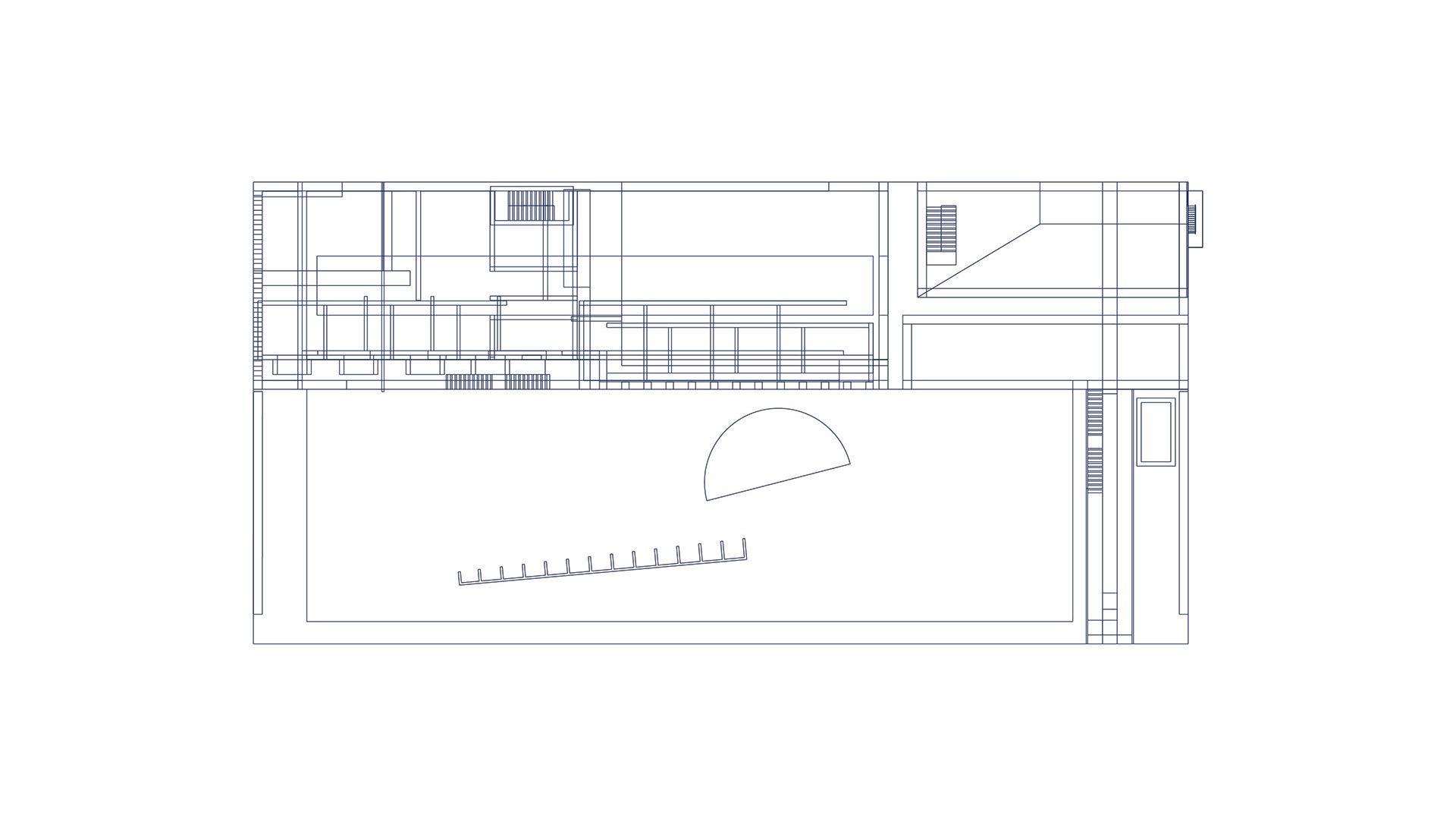
The digital is often understood in terms of the future, or a new technology but can it be understood as a medium in architecture?
Computers were introduced to the architecture discipline in 1959, and a debate on digital technology followed throughout the 1980s and 1990s that explored the use and production of architecture through the computer.
Ever since the digital age, the computer has become a medium in all fields. With its widespread use and advancements, current developments in artificial intelligence technology are entering the cognitive era; when computer-based technology simulates human cognitive skills. The use of AI in architecture sparks questions on authorship, whether the human prompt to AI is the author or AI itself. To better understand the use of new technology in architecture it becomes important to understand its Past, Present and Future. In looking at a few examples in each of these categories we see a dialogue between the analog methods and the digital.
Past
The past can be understood through Peter Eisenmann’s Biozentrum project, which used a schematic representation of a single DNA strand and translated it into a fractal geometry. The software FormZ was then used to produce multiple iterations. However, Eisenmann disliked the outcome produced through the computer and chose to act like the computer by mimicking the algorithm in an analog manner to produce the final geometry.
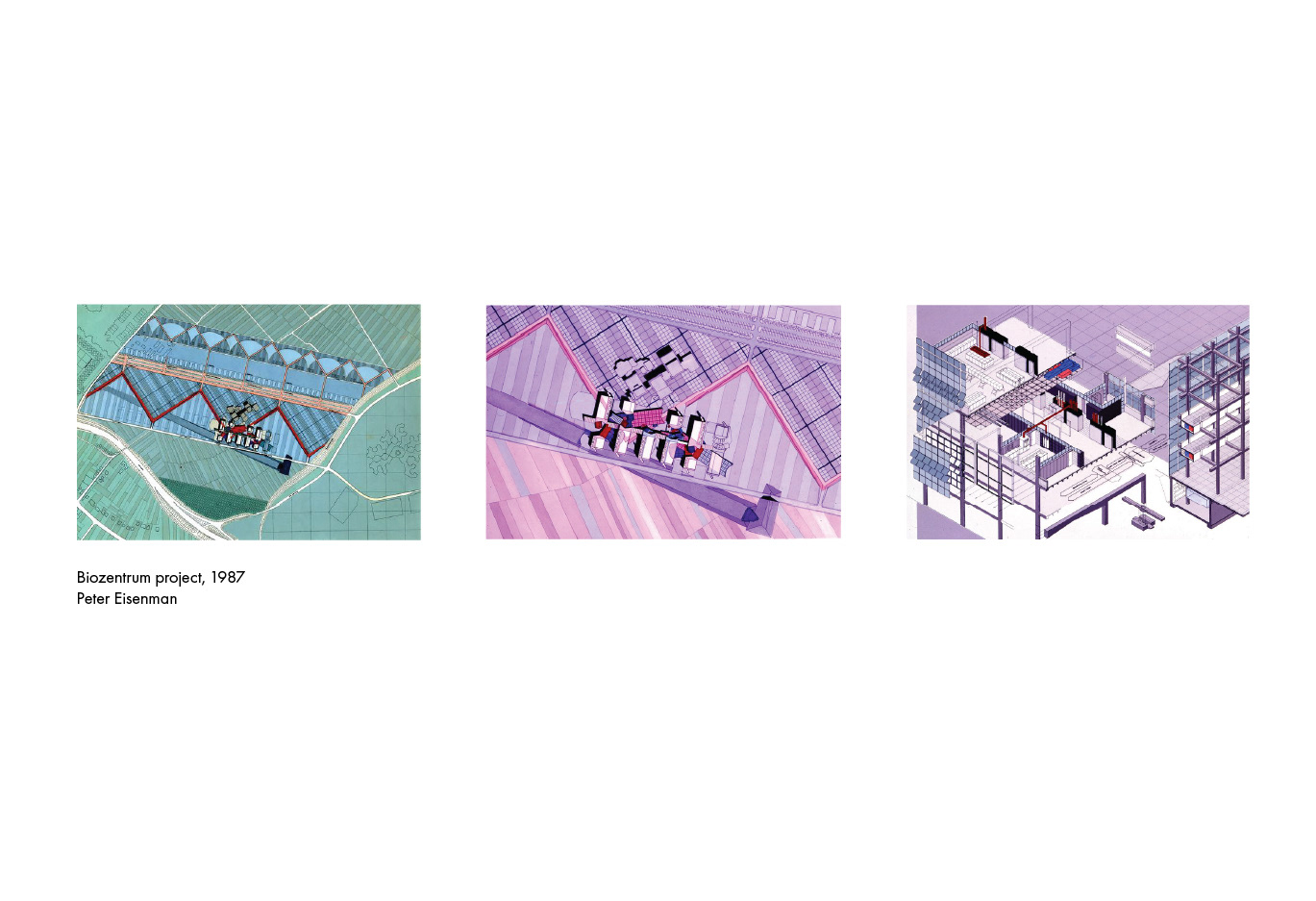
image credit: EISENMAN ARCHITECTS
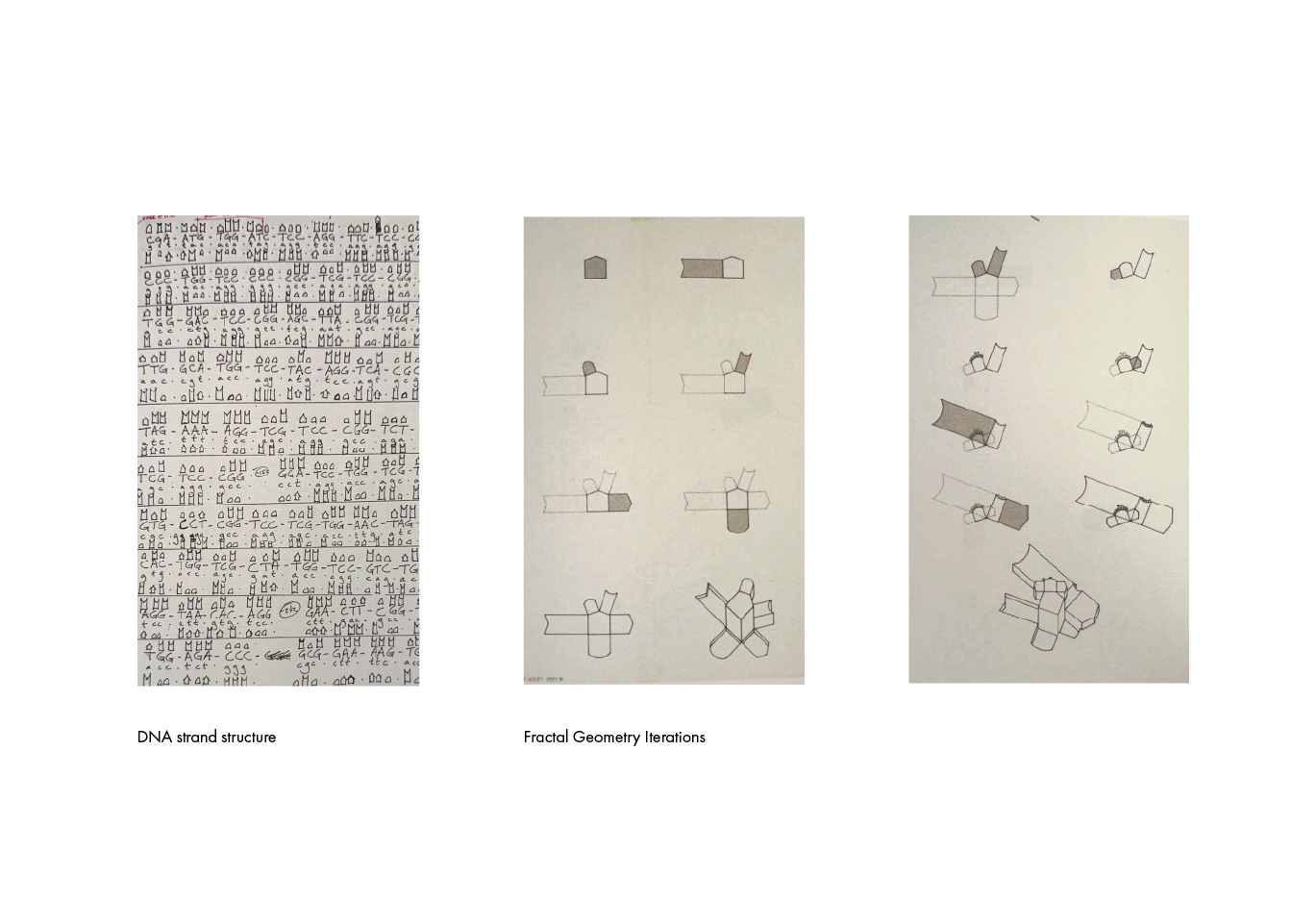
image credit: EISENMAN ARCHITECTS
Present
The present can be seen in Projector I by Millions; an investigation into form-making through images. Renders are dissected analyzed and reorganized using image-processing algorithms that are based on pixel quantification. These pixel clusters are then sorted using color properties and then tracked spatially on the cartesian grid essentially collecting and tracking their location in a dual space between the image and the frame buffer, revealing a three-dimensional space of the image. Here the digital becomes the form and the method of plugging in different values becomes the analog.
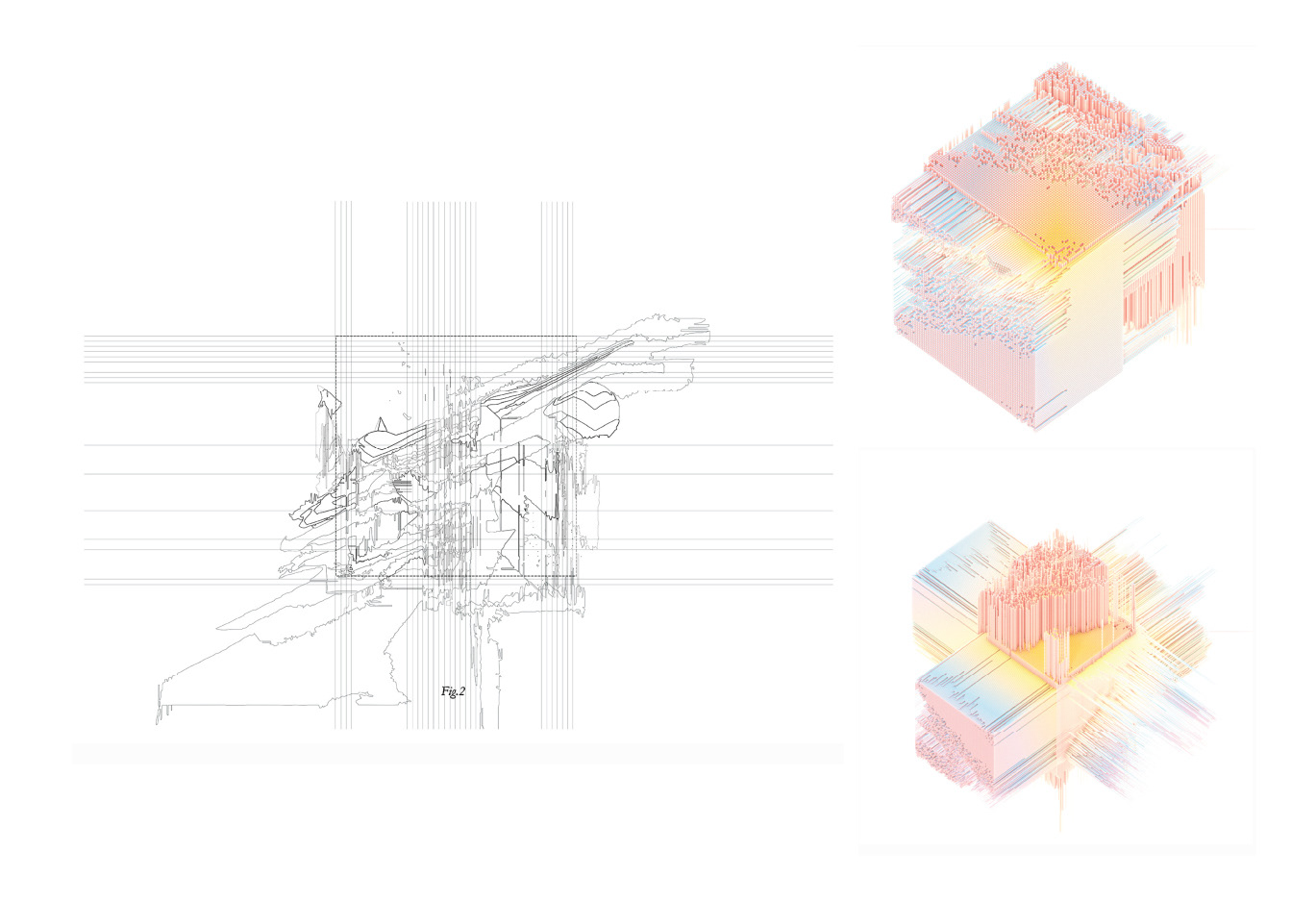
image credit: MILLIØNS
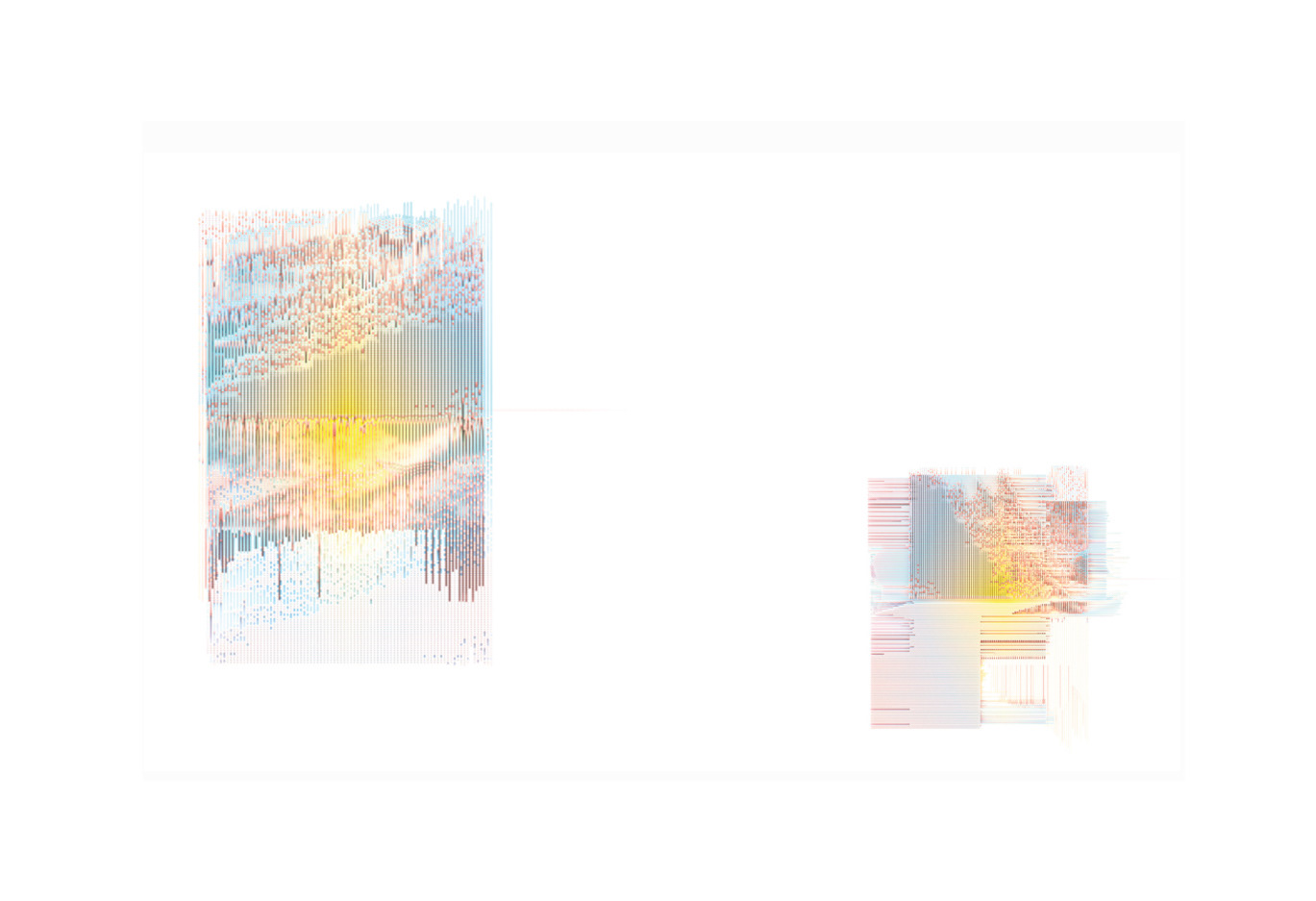
image credit: MILLIØNS
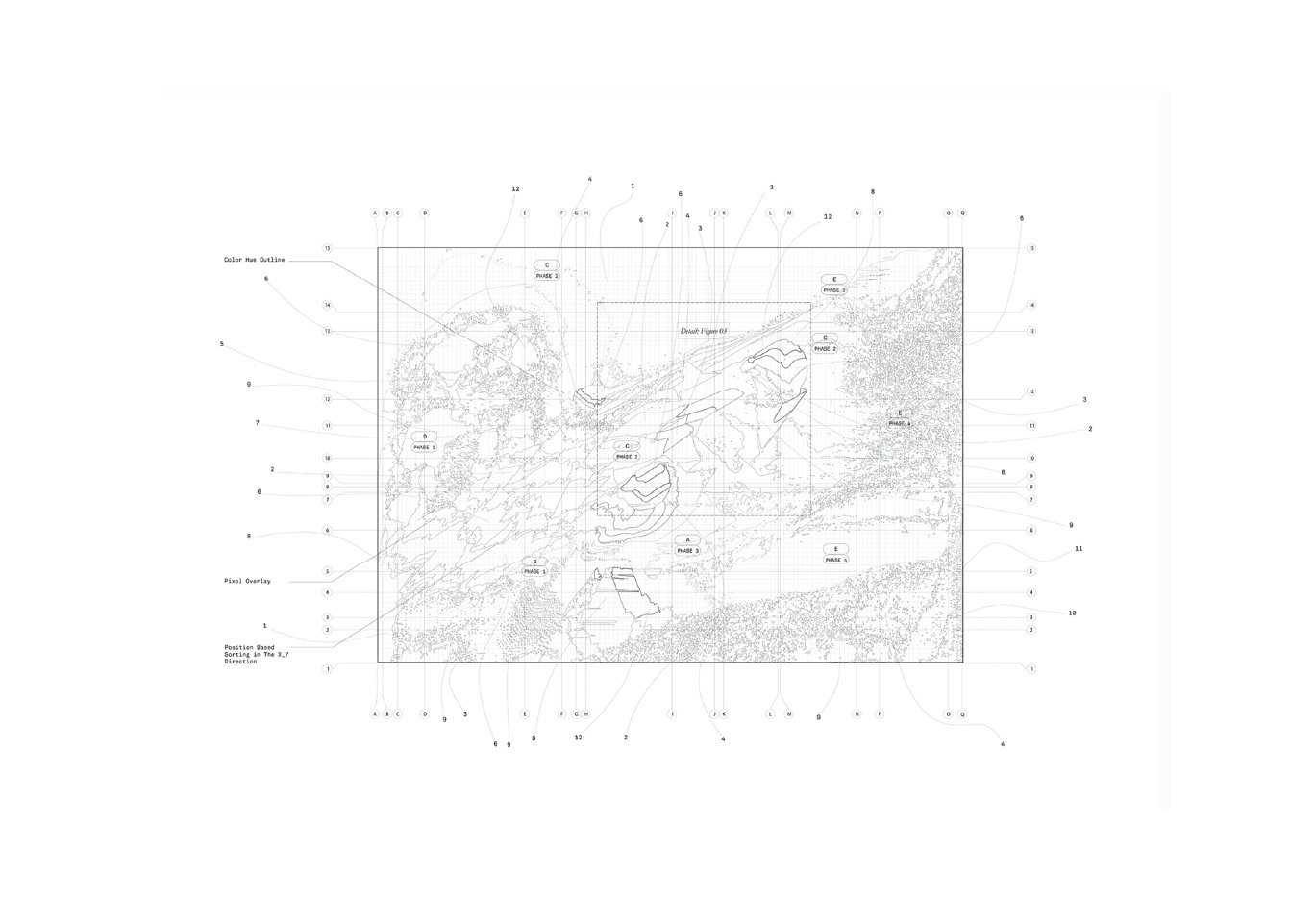
image credit: MILLIØNS
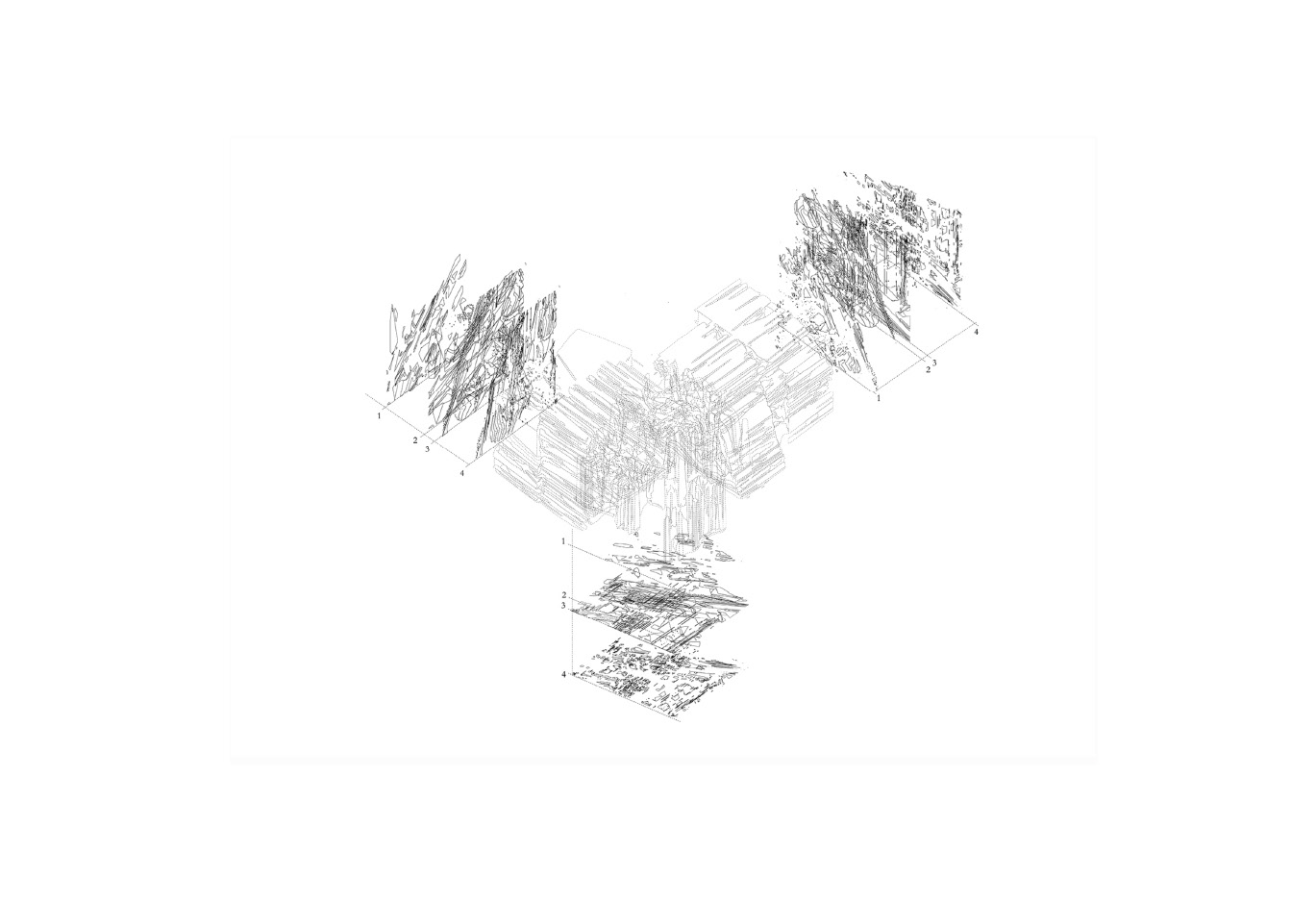
image credit: MILLIØNS
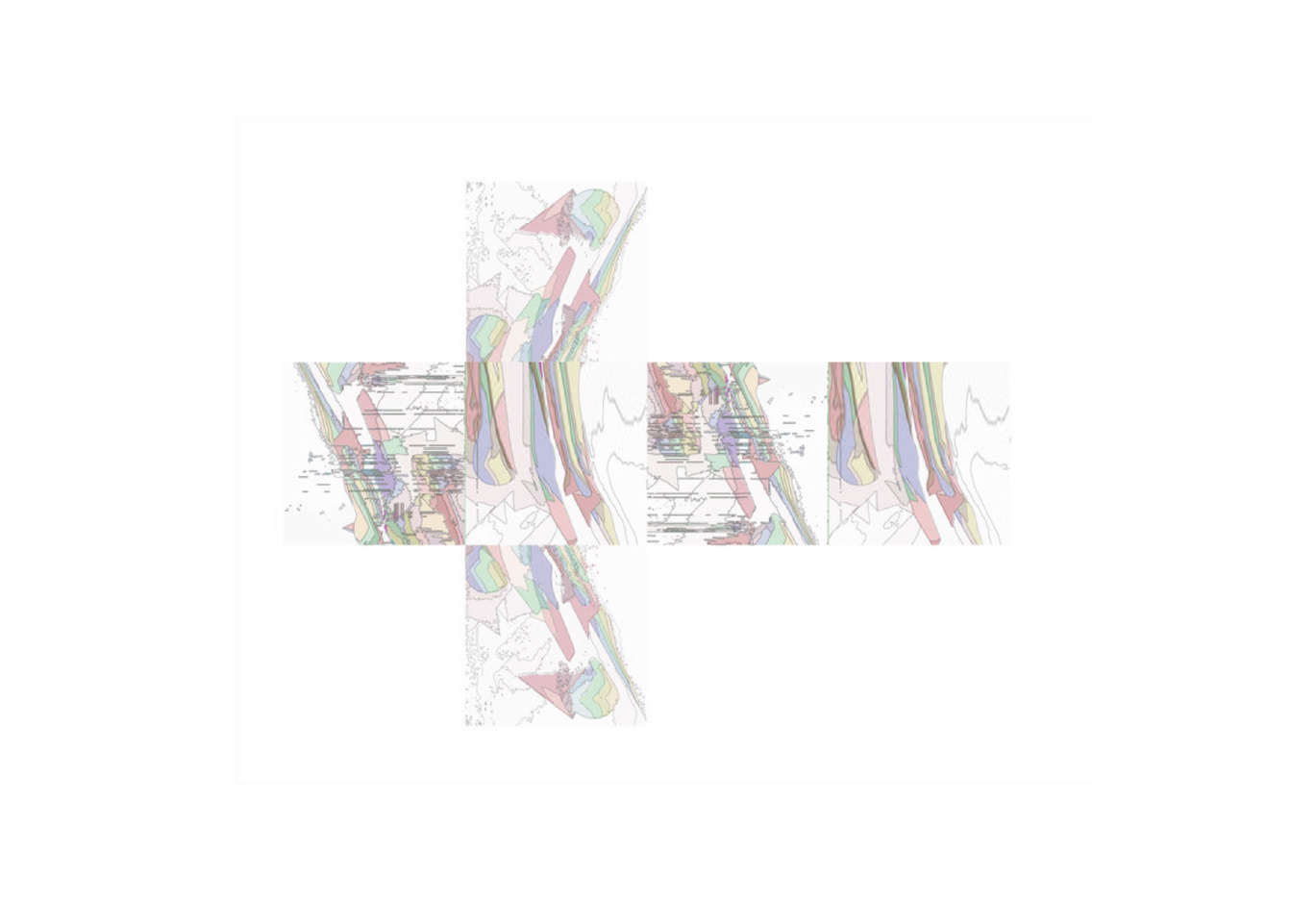
image credit: MILLIØNS
Future
The future can be seen using Artificial intelligence. In the Vertical Studio, Relief Package, Ramiro investigates the use of AI technologies such as Midjourney and Topaz Labs to replicate farmland and predict crop growth patterns. Here a careful workflow is developed that includes the creation of the desired geometry as a line map, which is uploaded to Midjourney along with a prompt and a mood board that comprises curated images that resemble the desired outcome, the post-production can be done manually in photoshop or by using the Midjourney images as a texture map in a rendering software.
The future can be seen using Artificial intelligence. In the Vertical Studio, Relief Package, Ramiro investigates the use of AI technologies such as Midjourney and Topaz Labs to replicate farmland and predict crop growth patterns. Here a careful workflow is developed that includes the creation of the desired geometry as a line map, which is uploaded to Midjourney along with a prompt and a mood board that comprises curated images that resemble the desired outcome, the post-production can be done manually in photoshop or by using the Midjourney images as a texture map in a rendering software.
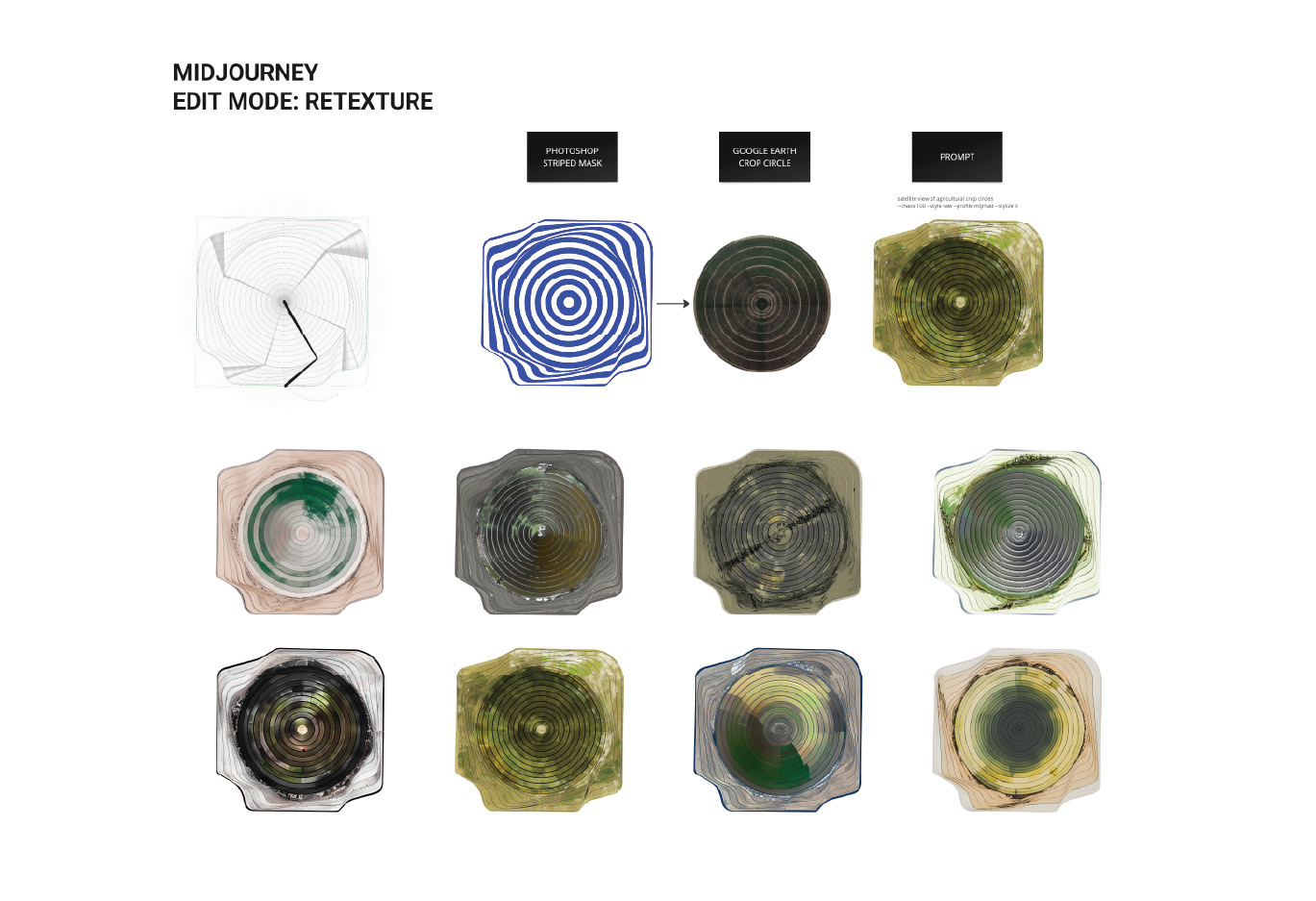
image credit: Ramiro Diaz Granados
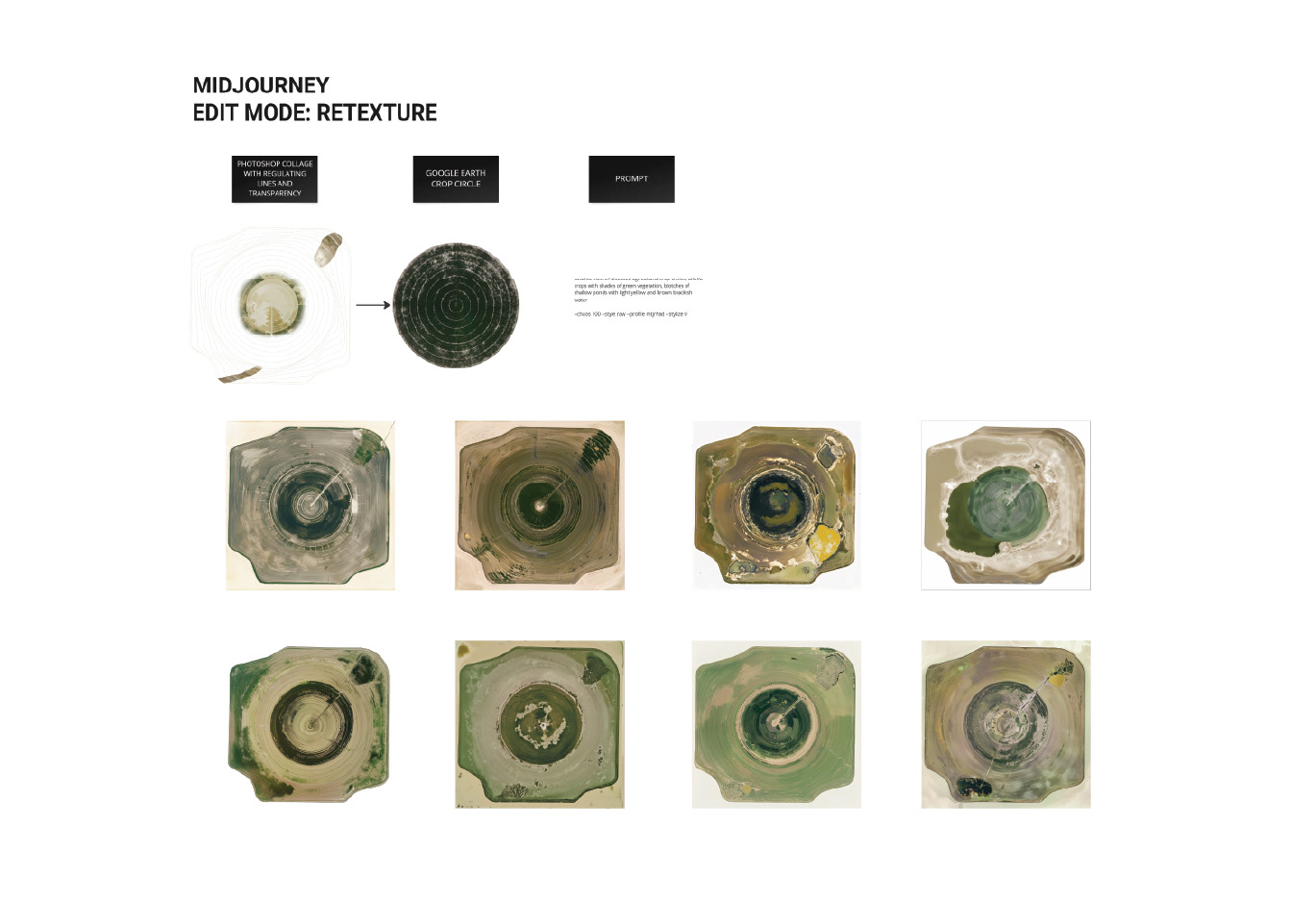
image credit: Ramiro Diaz Granados
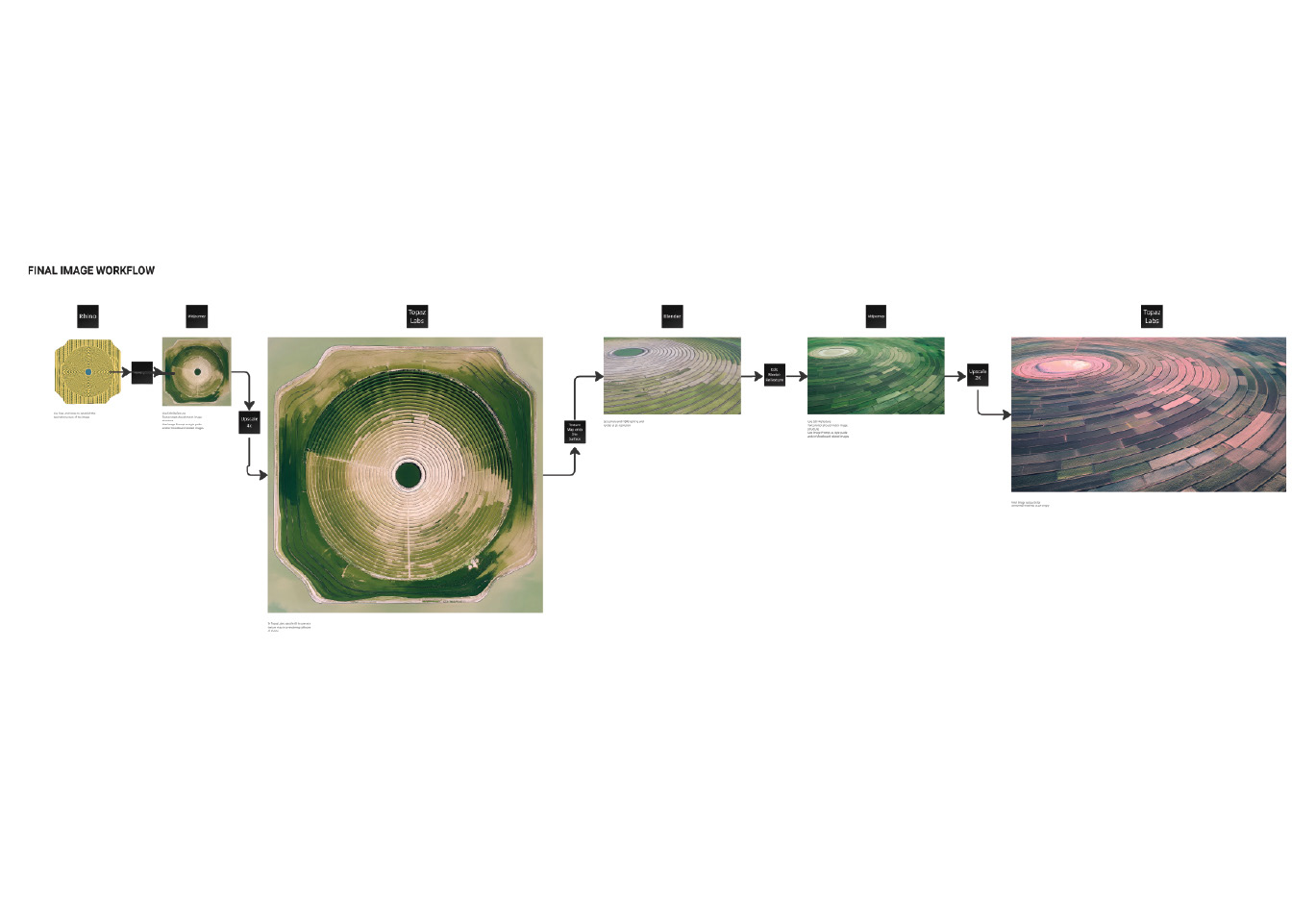
image credit: Ramiro Diaz Granados
Through these examples, we can understand the relationship between the analog and the digital, for Eisenmann, 3D modeling software was digital and the practical hand drafting was analog. For Projectors I the 3D modeling software can be seen as analog and the image-making software as digital, for the Relief Package Studio, AI becomes digital, and image-making software such as Photoshop becomes the analog. It can be understood that the analog is crucial to the digital and having an optimized workflow between the two creates a language that can translate existing knowledge with new technologies. The analog will forever remain an indexical precursor to a yet unrealized digital. The intentionality of the design through its precise accuracy, consistency and optimization becomes important in using the new digital.
(Written as part of Design Discourse seminar with Marcelyn Gow at SCI-Arc)